


Contents
- 1 Table of Contents
- 2 AI Mobile App Development Company for Smart, Context-Aware Solutions
- 3 Chatbots vs. AI Teammates: What’s the Difference?
- 4 What Makes a Context-Aware Mobile App Work?
- 5 Machine Learning: The Engine Behind the Shift
- 6 Context-Aware Mobile Apps in Action: Real-World Use Cases
- 7 Tools & Frameworks Empowering Developers
- 8 Why It Matters: The Business and User Benefits
- 9 Challenges and Trade-Offs: What Developers Must Watch For
- 10 What’s Next: AI Teammates in 2030?
- 11 Conclusion: We’re Not Just Building Apps — We’re Building Teammates
Table of Contents
- AI Mobile App Development Company for Smart, Context-Aware Solutions
- Chatbots vs. AI Teammates: What’s the Difference?
- What Makes a Context-Aware Mobile App Work?
- Machine Learning: The Engine Behind the Shift
- Context-Aware Mobile Apps in Action: Real-World Use Cases
- Tools & Frameworks Empowering Developers
- Why It Matters: The Business and User Benefits
- Challenges and Trade-Offs: What Developers Must Watch For
- What’s Next: AI Teammates in 2030?
- Conclusion: We’re Not Just Building Apps — We’re Building Teammates
AI Mobile App Development Company for Smart, Context-Aware Solutions
You open your project management app at 9 a.m., and instead of a static chatbot waiting for input, something smarter happens.
“Good morning! Based on your calendar, you’ve got a client call at 10. Want me to prep a summary of last week’s meeting notes and generate a draft follow-up email?”
This isn’t just a smart assistant; it’s a context-aware mobile app — proactive, personalized, and designed to understand your unique environment and needs.
Welcome to the future of mobile software: AI-powered, context-aware mobile apps that think like teammates, not tools. Enabled by machine learning, these apps can anticipate actions, respond to behavior, and collaborate intelligently.
In this blog, we’ll explore how context-aware mobile apps are reshaping the future of mobile experiences — including:
- What separates a chatbot from an AI teammate
- How context-awareness works
- The ML techniques powering intelligent behavior
- Real-world examples
- Tools for developers
- Challenges and what the future holds
Let’s explore how context-aware mobile apps can become your most valuable digital teammates.
Chatbots vs. AI Teammates: What’s the Difference?
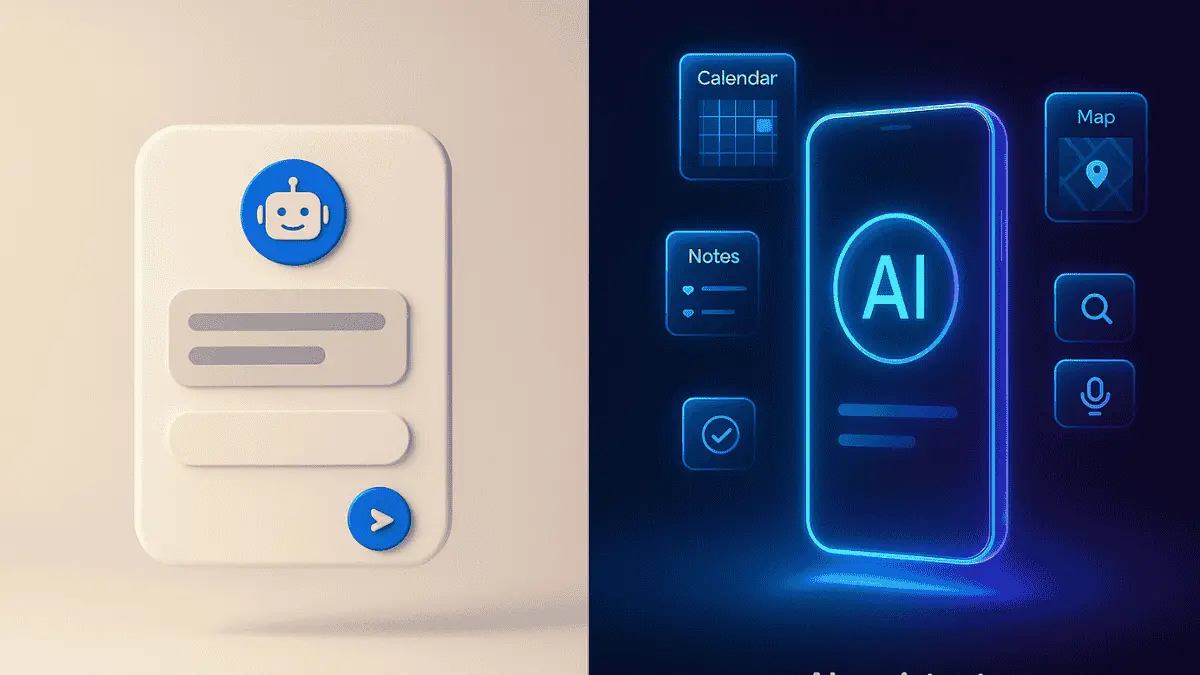
Before diving deeper, let’s clarify the difference between traditional chatbots and today’s more advanced context-aware mobile apps.
Chatbots:
These are typically rule-based systems that respond to predefined inputs. Whether through menus or keyword triggers, their role is reactive — offering help only when prompted.
Think of a basic customer support bot: “Press 1 for billing, 2 for support.” Even if powered by NLP, most chatbots lack real awareness of your context or goals.
AI Teammates:
This new generation of apps is context-aware, intelligent, and proactive. These aren’t just upgraded bots — they’re context-aware mobile apps that:
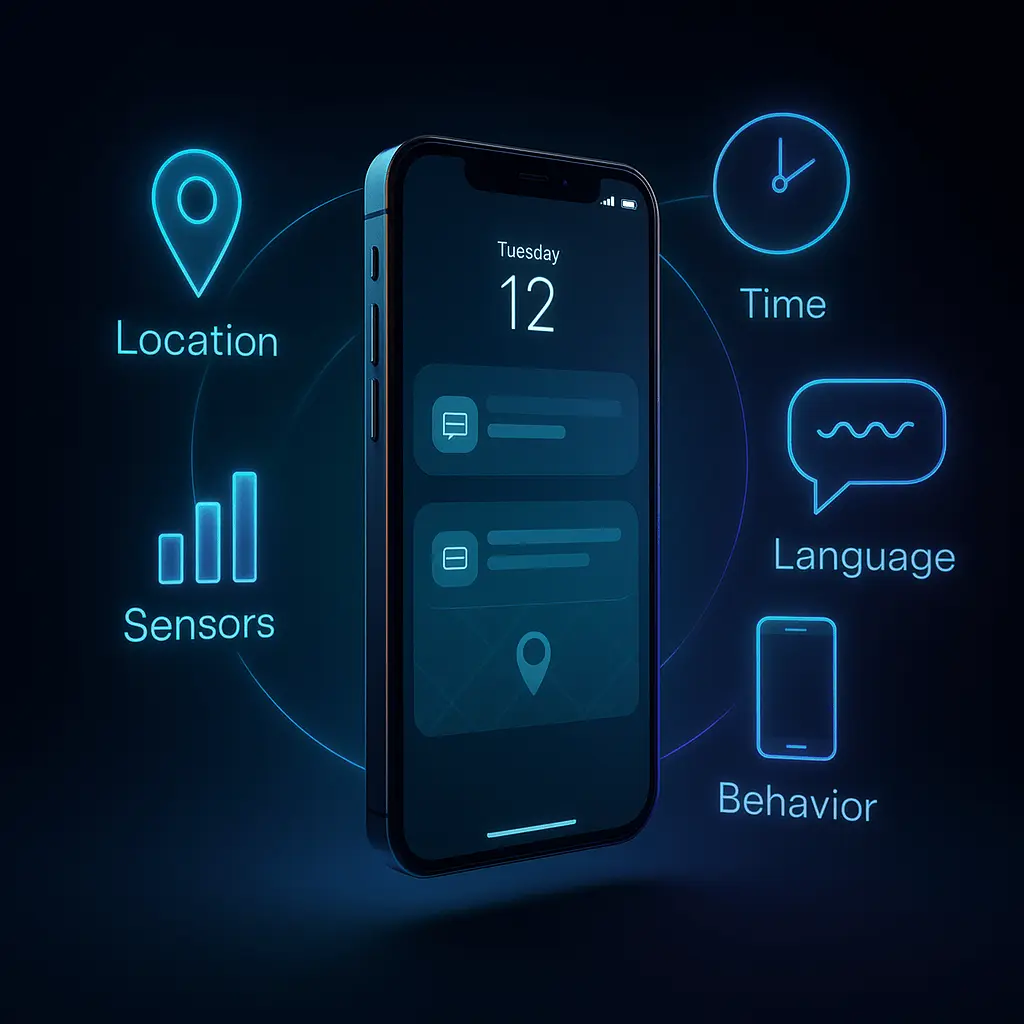
- Understand your environment (time, location, activity, patterns)
- Learn from behavior and personal history
- Predict needs and take initiative
- Collaborate like a digital teammate, not a tool
Where a chatbot waits for input, a context-aware mobile app anticipates your needs and offers help before you ask — much like a proactive coworker who’s always one step ahead.
This is the evolution from scripted interaction to real-time, personalized engagement — powered by machine learning and embedded directly into your mobile experience.
What Makes a Context-Aware Mobile App Work?
So how do we teach apps to think like that?
Machine learning is the backbone of context-aware mobile apps. Here’s how:
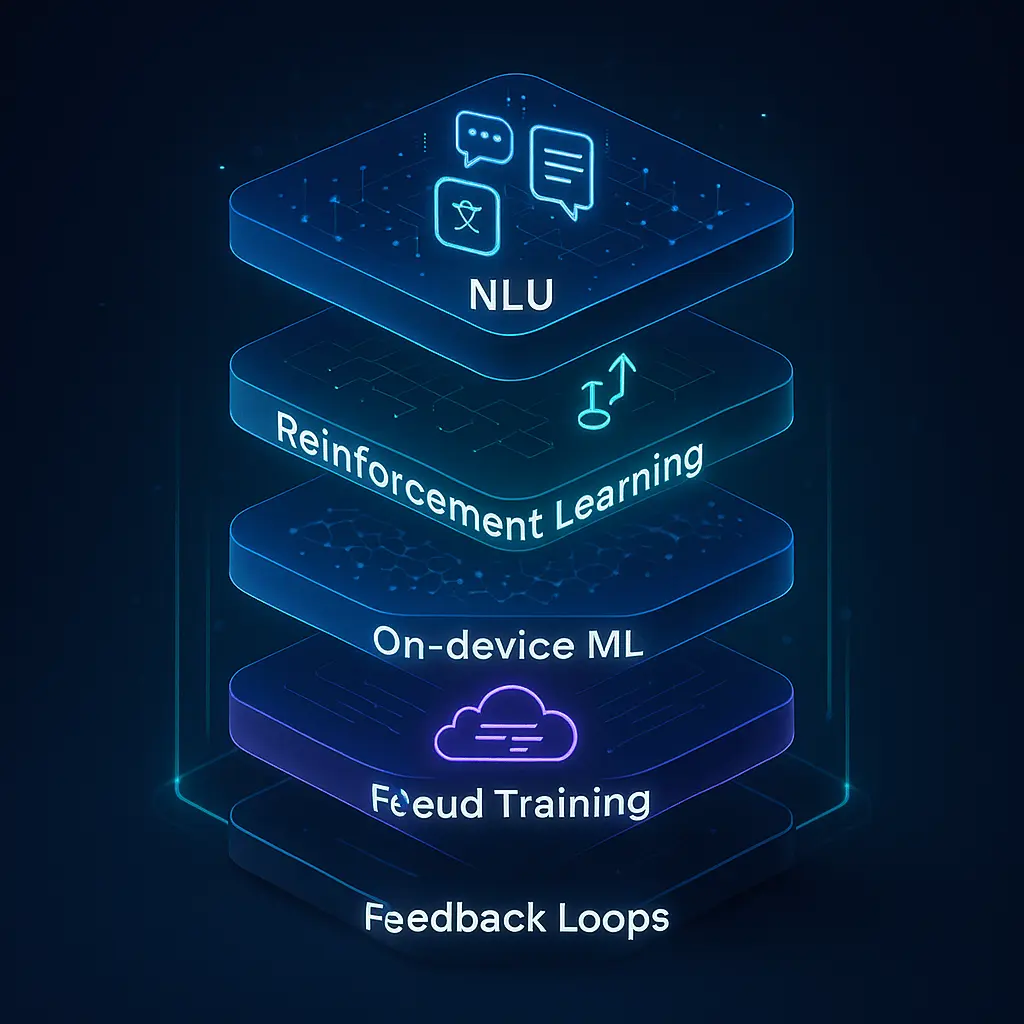
Natural Language Understanding (NLU)
- Recognizing intents, entities, sentiment
- Understanding nuance in tone and phrasing
- Adapting to domain-specific vocabulary
Example: “Hey, I need that thing we talked about yesterday” — a context-aware mobile app could trace back the reference.
Reinforcement Learning
- Learns from trial and error interactions
- Rewards are defined (e.g., user accepts the suggestion)
- Optimizes behavior for future interactions
On-Device vs. Cloud-Based Learning
- On-device ML (Core ML, TensorFlow Lite) for private, real-time inference
- Cloud models for deeper training
- Hybrid models: train in the cloud, infer on the edge
Feedback Loops
- Implicit and explicit feedback embedded in the experience
- Context-aware mobile apps get smarter every session
Machine Learning: The Engine Behind the Shift
So how do we teach apps to think like that?
The answer lies in a blend of machine learning techniques, each playing a specific role.
Natural Language Understanding (NLU)
This helps apps truly “get” what users are saying — beyond keywords.
- Recognizing intents, entities, sentiment
- Understanding nuance in tone and phrasing
- Adapting to domain-specific vocabulary
Example: “Hey, I need that thing we talked about yesterday” — an AI teammate could trace back the reference.
Reinforcement Learning
This enables apps to learn fromtrial and error.
- The more the app interacts with a user, the more it learns what works
- Rewards are defined (e.g., did the user accept the suggestion?)
- The app optimizes its future behavior accordingly
On-Device vs. Cloud-Based Learning
- On-device ML(e.g., Core ML, TensorFlow Lite) provides real-time, private inference
- Cloud modelsenable deeper training on larger datasets
- Many apps usehybridmodels — train in the cloud, infer on the edge
Feedback Loops
Modern apps embed implicit and explicit feedback:
- Did the user act on the suggestion?
- Did they correct the AI’s response?
- Did they opt out of similar interactions?
This feedback feeds the learning loop, making the AI smarter with every session.
Context-Aware Mobile Apps in Action: Real-World Use Cases
Some of the most successful apps today are already context-aware mobile apps:
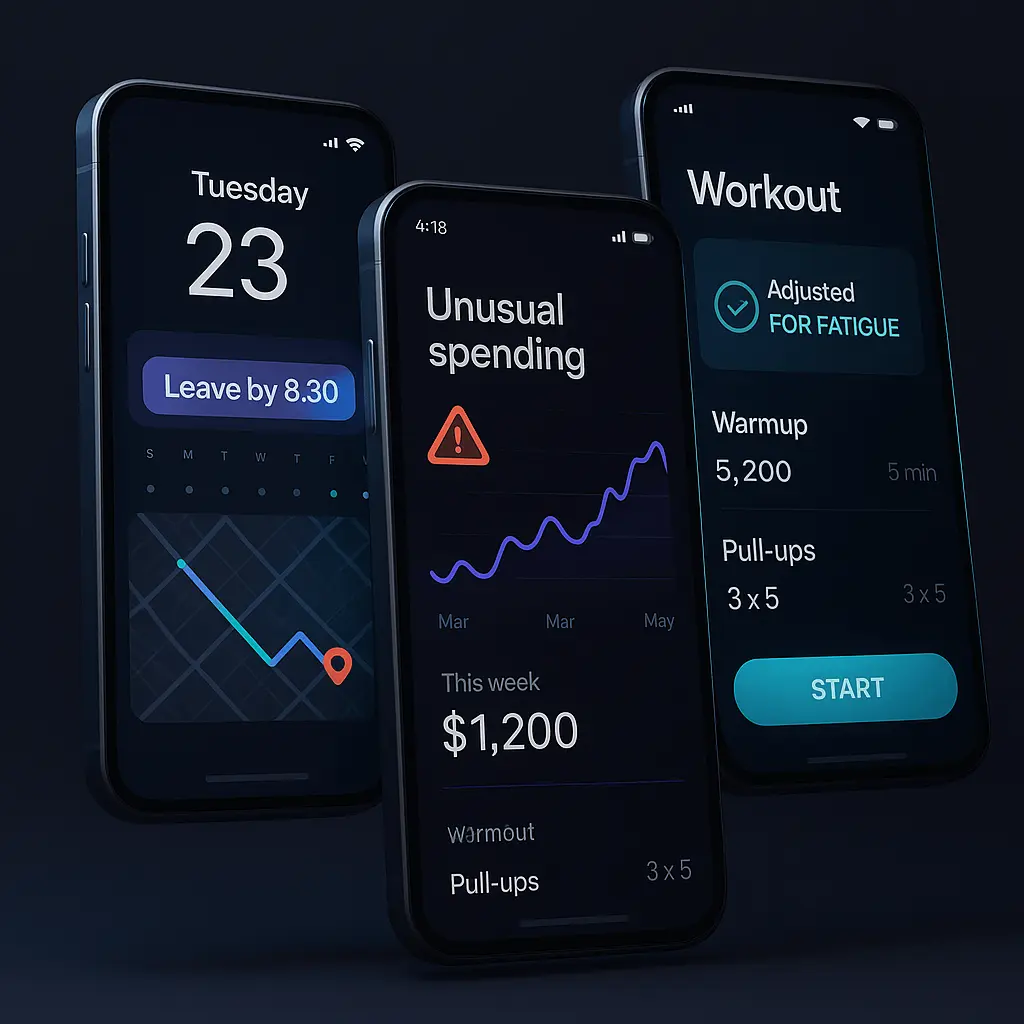
- Google Calendar + Assistant: Suggests meetings, warns about commutes, all based on habits and traffic.
- Calm / Fitbod: Suggests sessions based on mood, sleep, and workout recovery.
- Cleo / YNAB: Flags spending behavior and suggests saving or cutting costs.
- Notion AI / Grammarly GO: Proactively offers summaries, content improvement, and insights.
These apps demonstrate how context-aware mobile apps can proactively help users.
Tools & Frameworks Empowering Developers Even indie developers can build context-aware mobile apps today using modern tools:
- TensorFlow Lite / Core ML
- Dialogflow / Rasa / Wit.ai
- Firebase ML / ML Kit
- Edge Impulse / AWS Greengrass
- OpenAI / Anthropic APIs
At CROSSSHORES, we specialize in creating context-aware mobile apps using these frameworks — integrating Core ML, TensorFlow Lite, and OpenAI APIs to transform static tools into proactive teammates.
Tools & Frameworks Empowering Developers
Building context-aware AI teammates isn’t reserved for tech giants. Thanks to modern tools, startups and indie developers can now join the game.
Key Tools & SDKs:
- TensorFlow Lite / Core ML:Run ML models locally for faster and private inference
- Dialogflow / Rasa / Wit.ai:NLU frameworks for building conversational understanding
- Firebase ML / ML Kit:Mobile-friendly ML features with Google Cloud support
- Edge Impulse / AWS Greengrass:Edge ML platforms for contextual, low-latency AI
- OpenAI / Anthropic APIs:Use powerful foundation models to layer intelligence into apps
At CROSSSHORESwe specialize in building context-aware, ML-powered mobile applications for startups and enterprises alike. From integrating on-device ML with Core ML or TensorFlow Lite to leveraging cloud-based intelligence via OpenAI and Firebase, our team helps clients transform traditional apps into intelligent, proactive teammates. Whether you’re just prototyping or scaling to millions of users, we bring deep expertise in mobile AI development.
Why It Matters: The Business and User Benefits
- The impact of context-aware mobile apps is powerful:
- Apps feel more human and intuitive
- Reduces user effort and decision fatigue
- Learns and adapts over time — no manual updates needed
- Drives loyalty, retention, and deeper user insights
- Privacy: Transparent permissions and on-device inference are crucial
- Battery/Performance: Lightweight models and efficient code required
- Cloud vs. Edge: Latency vs. power — choose wisely
- UX Balance: Avoid creepy automation — give users control
Challenges and Trade-Offs: What Developers Must Watch For
Of course, this evolution brings complexity and responsibility.
Privacy Concerns
- Users are sensitive about data collection
- On-device inference and transparent permissions are a must
Battery & Performance
- ML models can be heavy
- Developers must optimize model size and energy use
Edge vs. Cloud
- On-device = faster + private, but limited in scale
- Cloud = powerful, but latency and connectivity matter
Avoiding “Creepy” UX
- Over-automation can feel invasive
- Apps must give users control, context, and explainability
Rule of thumb:Just because youcansuggest something doesn’t mean youshould.
What’s Next: AI Teammates in 2030?
Imagine a future where context-aware mobile apps collaborate, brainstorm, and help achieve goals:
- Multi-app intelligence
- Self-customizing UIs
- Emotion-adaptive systems
- Full task delegation
The next decade will be defined by context-aware mobile apps that blend machine learning with human-centered design.
Partner Spotlight: CROSSSHORES We help businesses build the future with context-aware mobile apps — whether it’s a wellness app that adapts to mood or a productivity app that writes follow-ups.
From prototype to scale, CROSSSHORES delivers AI-powered, context-rich mobile experiences that anticipate user needs.
Conclusion: We’re Not Just Building Apps — We’re Building Teammates
We’re Not Just Building Apps — We’re Building Teammates This shift to context-aware mobile apps isn’t just technical — it’s philosophical.
We’re no longer building tools that wait. We’re building teammates that anticipate, learn, and collaborate.
And as we move forward, we must do so with empathy, clarity, and care.
Because the future of mobile isn’t about screens — it’s about synergy between humans and machines, working together through context-aware mobile apps.